Introduction
As Japanese companies move into the United States market, they encounter a legal environment that differs significantly from Japan’s civil law framework. Among the most consequential areas of exposure are personal injury and premises liability risks. These areas of law are shaped by U.S. tort principles, a highly active plaintiffs’ bar, and a litigation system that can produce substantial and unpredictable damage awards.
This article provides an overview of the legal risks, material differences, and practical considerations Japanese companies should understand when conducting business in the United States. It also outlines strategies to mitigate liability and adapt effectively to the U.S. legal landscape.
I. The U.S. Tort Law Framework
At the core of personal injury and premises liability in the United States is the doctrine of negligence. To establish liability for negligence, a plaintiff (i.e., claimaint) must generally prove four elements: (1) that the defendant (i.e., the party defending a claim) owes a duty of care; (2) that the defendant breached that duty; (3) that the breach effectively caused the plaintiff damages; and (4) that the plaintiff actually suffered damages.
While this framework may appear straightforward, its application in the U.S. is expansive. Courts evaluate conduct based on what a “reasonable person” would do under similar circumstances, using U.S.-specific norms and expectations. Compliance with Japanese standards does not necessarily shield a company from liability. Moreover, U.S. law often requires businesses to anticipate foreseeable misuse of products or premises, a concept that can significantly broaden exposure.
II. Personal Injury Liability
- Negligence-Based Claims
Japanese companies operating in the U.S. may face negligence claims arising from (among other things):
- Unsafe operational practices
- Inadequate employee training
- Failure to implement industry-standard safety measures
- Insufficient warnings or instructions
Warnings must be clear, prominent, and provided in English. Failure to meet these expectations can result in liability even if the underlying condition is not inherently dangerous.
- Jury Trials and Damage Awards
A major difference between the U.S. and Japanese systems is the role of juries in civil litigation in the United States. Juries comprising ordinary citizens chosen to sit for just that case often determine liability and damages, creating some measure of unpredictability.
Damage awards may include:
- Economic damages (e.g., medical expenses, lost wages)
- Non-economic damages (usually pain and suffering or emotional distress)
- Punitive or exemplary damages (to punish egregious conduct)
Punitive or exemplary damages present a particularly significant risk because they can far exceed compensatory damages. A heightened standard of proof is usually required before they may be awarded.
- Strict Product Liability
For companies that manufacture or distribute products, strict liability is a major source of exposure. Liability can arise without proof of negligence if a product is defective. Defects typically fall into one of three categories: (a) Design defects; (b) Manufacturing defects; or (c) Failure to warn. Even well-designed products can trigger liability if a safer alternative design exists or if warnings are inadequate.
III. Premises Liability
Premises liability can arise when an individual is injured on property owned, leased, or controlled by a business.
A. Categories of Entrants onto Land
U.S. law categorizes three types of entrants onto land:
- Invitees (customers, clients): The highest duty of care is owed to invitees
- Licensees (social guests): A moderate duty applies
- Trespassers: A limited duty applies (with exceptions)
Businesses must inspect, maintain, and repair premises, and warn of known dangers.
B. Common Premises Liability Claims
Typical claims include:
- Slip and fall accidents
- Inadequate security leading to criminal acts
- Unsafe structural conditions
- Violations of building or safety codes
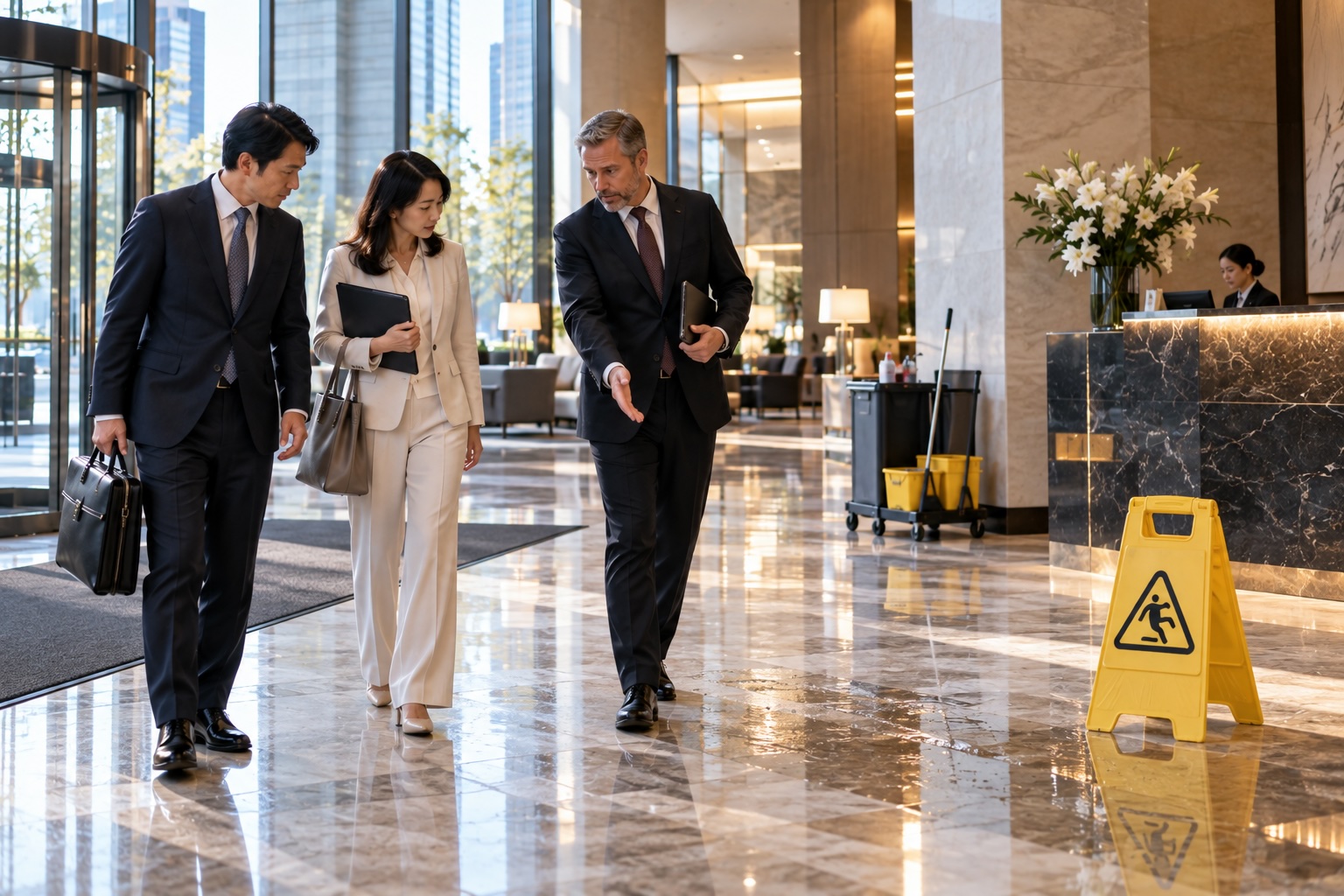
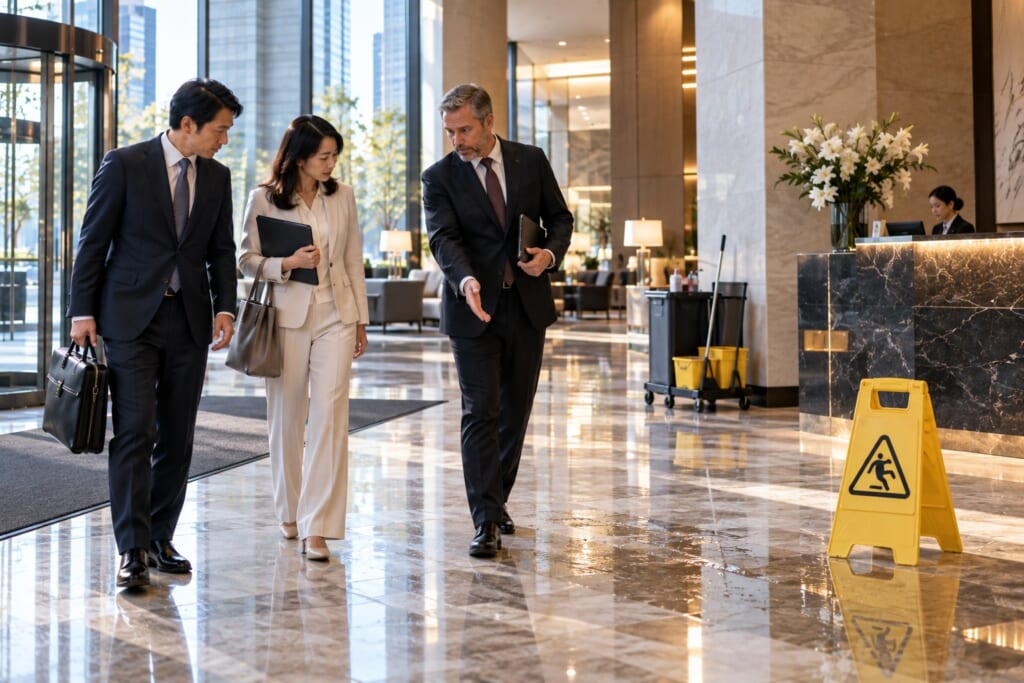
Failure to address hazards such as wet floors, uneven surfaces, or snow and ice can lead to liability.
C. Constructive Notice
A company may be liable not only for hazards it knew about, but also for those it should have known about through reasonable inspection. This creates a duty to conduct regular inspections, maintain maintenance records, and monitor systematically for hazards.
IV. Regulatory Impact on Liability
- Workplace Safety Regulations
Businesses operating in the United States must comply with federal and state workplace safety regulations. Non-compliance can lead to fines and enforcement actions, serve as evidence of negligence, and increase employer exposure to employee injury claims.
B. Accessibility Requirements
U.S. law requires businesses to ensure accessibility for individuals with disabilities. Non-compliance can result in lawsuits, mandatory facility modifications, and/or reputational harm.
V. U.S. Litigation
Certain features of the U.S. system increase litigation risk. These include:
- Contingency Fees – Plaintiffs’ attorneys often work on a contingency basis, encouraging more lawsuits.
- Broad Discovery – The discovery process allows extensive evidence gathering, including internal documents, emails, and depositions of employees and executives. This can be costly and burdensome.
- Class Actions – Companies may face class action lawsuits involving multiple plaintiffs, significantly increasing exposure.
VI. Cross-Border Liability
Operating through a U.S. subsidiary does not necessarily fully shield a Japanese parent company from liability. Courts may impose liability on the parent if it exercises significant control or if corporate formalities are not followed or if the subsidiary is undercapitalized. Plaintiffs often attempt to reach the parent company’s resources if the subsidiary has insufficient funds,.
VII. Risk Mitigation
Certain tools are available to mitigate the risks of liability inherent in the United States legal system. These include the following summaries of things companies can do:
- Compliance and Operational Controls
- Implement U.S.-specific safety protocols
- Conduct regular inspections and audits
- Maintain detailed records
- Legal Preparedness
- Localize contracts and warnings
- Monitor state-specific laws
- Engage U.S. legal counsel
- Insurance Coverage
Key policies include:
- General liability insurance
- Product liability insurance
- Umbrella/excess coverage
- Employee Training
- Provide safety training
- Establish incident reporting systems
- Prepare crisis response plans
E. Pre-Planning
Companies should consider taking steps in advance to lessen their risk:
- Arbitration clauses in contracts
- Forum selection provisions in contracts
- Early settlement strategies in disputes
These tools can help manage litigation risk and costs.
Conclusion
Operating in the United States offers significant opportunities but also exposes Japanese companies to potentially substantial personal injury and premises liability risks. Compared to Japan, the U.S. legal system imposes broader duties, encourages more litigation, and allows for larger and less predictable damages.
To succeed, companies must adopt a U.S.-focused approach emphasizing compliance, safety, and legal preparedness. With the right strategies in place, businesses can effectively manage risk while capitalizing on opportunities in the U.S. market.
This article does not constitute legal advice but presents only a general overview of common legal principles. Those principles may vary by jurisdiction. You should consult legal counsel with regard to your specific situation. No attorney-client relationship is formed by the publishing of this article.
コメント